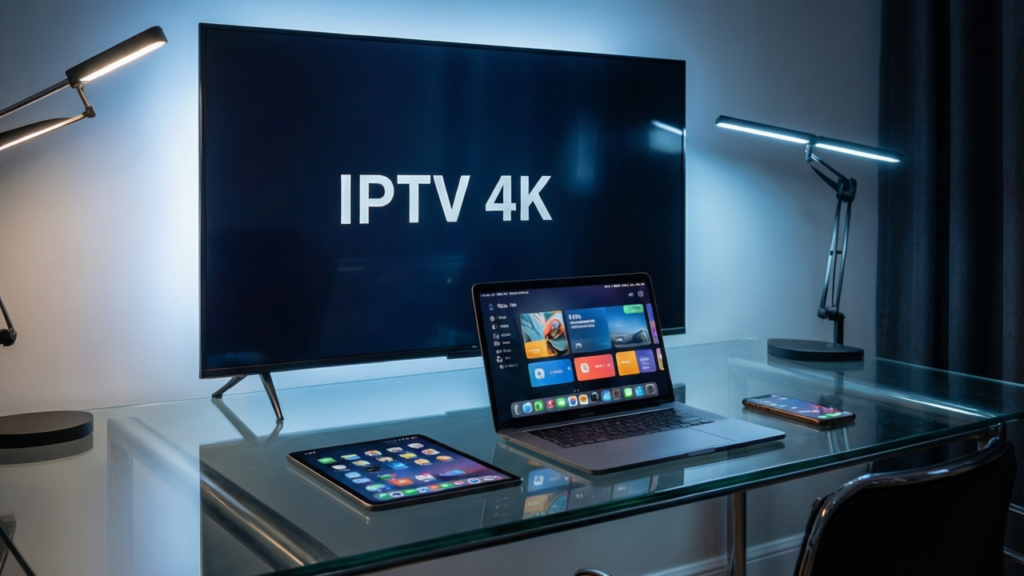
Internet Protocol Television, or IPTV 4K, refers to the delivery of television content over IP networks in Ultra High Definition. Unlike traditional cable or satellite, this technology uses your home internet to stream live channels and on-demand movies at a resolution of 3840 x 2160 pixels. This results in an image that is four times sharper than standard 1080p HD, providing a theater-like experience in your living room.
In 2026, the IPTV 4K market has matured into a multi-billion dollar industry driven by the widespread adoption of high-speed fiber optics. Most modern providers now utilize advanced delivery systems that allow for instantaneous channel switching and crystal-clear picture quality. This evolution ensures that viewers no longer have to compromise on visual fidelity when moving away from expensive traditional cable packages.
To understand the sheer scale of the visual upgrade, consider the pixel density of various formats. Standard Definition (SD) offers minimal detail, while High Definition (HD) significantly improves clarity for most modern screens. However, IPTV 4K stands at the top of the hierarchy, delivering over 8 million individual pixels to ensure every detail of a live sports broadcast or cinematic masterpiece is visible.
The Evolution of Streaming: From SD to IPTV 4K
The journey to IPTV 4K began with low-resolution streams that often suffered from heavy compression and frequent artifacts. As compression algorithms improved, the industry moved through 720p and 1080p phases before finally reaching the 4K milestone. Today, the focus has shifted from merely providing 4K to ensuring that the high dynamic range (HDR) and frame rates are also optimized for the best possible output.
Key Features of a Premium IPTV 4K Service
Native Resolution: True IPTV 4K content that is not just upscaled from a lower-quality 1080p source.
High Frame Rates: A minimum of 60 frames per second (fps) for smooth motion during live sports and action movies.
Electronic Program Guide (EPG): A modern, interactive interface that makes navigating thousands of channels simple and intuitive.
Catch-Up TV: The ability to watch previously aired shows directly from the cloud without needing a separate recording device.
Technical Requirements for Stable IPTV 4K Playback
Streaming IPTV 4K requires a robust technical foundation to ensure that the massive amount of data is processed without interruption. The most critical factor is your internet connection, which must handle sustained high-speed data transfers for hours at a time. Without meeting these baseline specs, users often encounter the dreaded buffering wheel, which ruins the immersive nature of Ultra HD content.
Bandwidth management is another essential component of a successful IPTV 4K setup. While many households have high-speed internet, the “available” bandwidth can drop significantly if multiple people are gaming or working from home simultaneously. It is highly recommended to use a dedicated connection or a high-end router that can prioritize video traffic over other types of home data.
Resolution Format
Recommended Speed
Data Usage Per Hour
Standard (480p)
3 – 5 Mbps
0.7 GB
High Def (1080p)
10 – 15 Mbps
3.0 GB
IPTV 4K (UHD)
25 – 50 Mbps
7.0 – 9.0 GB
Minimum Internet Speeds Required for IPTV 4K
For a reliable IPTV 4K experience in the United States, you should aim for a download speed of at least 50 Mbps. While some services claim to work on 25 Mbps, this leaves very little “headroom” for network fluctuations or other devices in your home. According to industry streaming standards, 4K video is highly sensitive to speed drops, making a faster plan a wise investment.
Why H.265 (HEVC) is the Essential Codec for IPTV 4K
Video compression is the “secret sauce” that makes IPTV 4K possible over standard residential internet lines. The High Efficiency Video Coding (HEVC) or H.265 codec is the industry standard because it compresses video 50% more efficiently than older H.264 technology. This allows the same 4K quality to be delivered using half the data, which is essential for maintaining stability on varied connection speeds.
Top Hardware and Devices for IPTV 4K in 2026
The device you choose to run your IPTV service is just as important as the service itself. Cheaper, low-powered streaming sticks often lack the processing power (RAM and CPU) to decode heavy 4K streams smoothly. In 2026, the market is led by dedicated set-top boxes that feature advanced cooling and high-speed processors designed specifically for video playback.
High-end hardware ensures that the user interface remains snappy and responsive, even when loading large 4K playlists with thousands of entries. Devices with dedicated Ethernet ports are particularly favored by enthusiasts because they eliminate the interference issues common with Wi-Fi. If you are serious about IPTV, investing in a premium box is the single best way to improve your overall viewing experience.
Best Android TV Boxes for Native IPTV 4K Support
The Nvidia Shield TV Pro remains a top choice in 2026 due to its exceptional AI upscaling and robust hardware. Similarly, the latest Amazon Fire TV Stick 4K Max offers a more budget-friendly entry point while still supporting the latest Wi-Fi 6E standards. For those who prefer a more streamlined experience, the Google TV Streamer 4K provides a clean interface with integrated voice search capabilities.
Setting Up IPTV 4K on Samsung and LG Smart TVs
Many modern Smart TVs come with built-in apps that can handle IPTV without the need for external hardware. You can simply download a compatible player from the LG Content Store or Samsung Smart Hub and enter your service credentials. However, be aware that TV processors can sometimes lag behind dedicated boxes, so use a wired connection whenever possible to maximize performance.
Best IPTV 4K Players and Apps
Software plays a pivotal role in how you interact with your IPTV content on a daily basis. A well-designed app will organize your channels, movies, and TV shows into a beautiful, easy-to-read grid that looks great on a large screen. In 2026, the best apps also offer features like “Picture-in-Picture” so you can watch multiple 4K sports games at the same time.
Most IPTV players operate using either M3U playlists or the more advanced Xtream Codes API. The API method is generally preferred because it automatically organizes content into categories and provides better metadata, such as movie posters and plot summaries. Choosing an app with a strong developer team ensures that you receive regular updates to fix bugs and improve 4K compatibility.
Optimizing TiviMate for IPTV 4K Playlists
TiviMate is widely considered the gold standard for IPTV users on Android-based devices. Its professional interface mimics the look and feel of high-end satellite receivers, offering a seamless navigation experience. To get the most out of it, users should enable the “Afr” (Auto Frame Rate) feature, which matches your TV’s refresh rate to the source video for perfectly smooth playback.
Using IPTV Smarters Pro to Access Ultra HD Content
IPTV Smarters Pro is another highly versatile option that works across almost every platform, including iOS, Android, and Windows. It features a built-in multi-screen tool that is perfect for watching several IPTV feeds simultaneously. Because it supports external players like VLC or MX Player, you can further customize your video settings to ensure the highest possible output quality.
How to Fix Buffering on IPTV 4K Streams
Buffering is the most common frustration for users attempting to stream IPTV content. It usually occurs when the data stream is interrupted or when the device cannot process the incoming information fast enough. Understanding the root cause—whether it is your internet, your hardware, or the provider’s server—is the first step toward a permanent fix.
Network congestion is a frequent culprit, especially during major live events when millions of people are streaming at once. Many Internet Service Providers (ISPs) in the US also engage in “throttling,” where they intentionally slow down high-bandwidth video traffic to save network resources. To combat this, users often turn to advanced networking techniques and specialized software to protect their IPTV connection.
The Role of a VPN in Enhancing IPTV 4K Stability
A Virtual Private Network (VPN) is a crucial tool for anyone experiencing ISP throttling on their IPTV service. By encrypting your traffic, a VPN prevents your provider from seeing that you are streaming video, allowing you to bypass artificial speed limits. According to official privacy experts, using a high-speed VPN can actually improve your connection quality if your ISP is actively limiting your bandwidth.
Hardwiring vs. Wi-Fi: Boosting Your IPTV 4K Signal
Ethernet (Best): Provides a dedicated, interference-free lane for your IPTV data.
Wi-Fi 6/6E (Better): Offers significantly better speeds and lower latency than older Wi-Fi 5 standards.
Powerline Adapters (Good): A useful alternative if you cannot run a long Ethernet cable through your house.
Wi-Fi Extenders (Avoid): These often increase latency and can cause more buffering issues than they solve.
Is IPTV 4K Legal? Safety and Privacy
The legal landscape of IPTV can be complex and depends heavily on the source of the content. Verified services that pay for broadcasting rights, such as YouTube TV or FuboTV, are completely legal and safe to use. However, many third-party providers operate in a legal gray area by offering premium channels at a fraction of the cost, which can carry risks for the end-user.
Security is another major concern when dealing with unverified IPTV services. Since these providers are often unregulated, your personal data and payment information could be at risk if the service is compromised. It is always recommended to use a secondary payment method, like a prepaid card or crypto, and never use your primary email address when signing up for these platforms.
“The rise of digital piracy has led to stricter enforcement, but consumers can protect themselves by choosing reputable providers and using proper security tools.” — Digital Media Rights Report 2026
How to Identify Legitimate IPTV 4K Providers
Legitimate IPTV providers will always have a transparent business model and a clear physical address or corporate headquarters. They are usually found on major app stores like Google Play or the Apple App Store, which have strict developer content policies. If a service requires you to sideload an app from an unknown website, proceed with extreme caution.
Frequently Asked Questions
Does IPTV 4K use a lot of data?
Yes, streaming in 4K resolution is very data-intensive. On average, an IPTV stream will consume between 7 GB and 10 GB of data per hour, which can quickly exceed monthly data caps on limited internet plans.
Why does my IPTV 4K channel look blurry?
This is often the result of “upscaling.” Many low-quality providers take a standard 1080p feed and digitally stretch it to 4K, which lacks the true detail of a native IPTV broadcast.
What is the best app for IPTV 4K in 2026?
TiviMate is generally considered the best app for Android TV and Firestick users. For those on Apple or Windows devices, IPTV Smarters Pro and GSE Smart IPTV remain the most reliable choices for 4K playback.
Can I watch IPTV 4K on a 1080p TV?
You can, but you will not see the benefits of the higher resolution. Your streaming device will automatically “downscale” the IPTV signal to match your TV’s 1080p screen, though the image might still look slightly better due to the higher bitrate.