The television landscape in 2026 has undergone a massive transformation as traditional cable subscriptions continue to plummet across the United States. Modern viewers are increasingly turning toward a professional IPTV provider to gain access to a global library of content that was once locked behind expensive contracts. This shift is driven by the desire for more flexibility, better picture quality, and the ability to watch live sports from any device.
Choosing a reliable IPTV provider is no longer just about the number of channels available on the list. In today’s market, server stability, data security, and customer support are the factors that truly define a premium experience. Without a high-quality service, viewers often face the frustration of constant buffering during the most critical moments of a live game.
This comprehensive guide will walk you through every essential detail you need to know about selecting an IPTV provider in 2026. We will explore the technical side of how these services work, the legal implications you should be aware of, and the specific red flags to avoid. By the end of this article, you will have the tools to choose a service that offers the perfect balance of price and performance.
Table of Contents
What is an IPTV Provider and How Does It Work?
An IPTV provider is a service that delivers television content over the internet using the Internet Protocol (IP) suite instead of traditional terrestrial, satellite, or cable formats. This technology allows for a much more interactive experience where content is streamed in data packets directly to your device. Unlike traditional broadcasting, which sends out all signals simultaneously, IPTV only sends the specific program you have requested at that moment.
The infrastructure of a modern IPTV provider relies heavily on powerful servers and Content Delivery Networks (CDNs) strategically located around the world. These servers store vast amounts of data and use advanced compression techniques to ensure that high-definition video can be transmitted even over moderate internet speeds. When you select a channel, your device sends a request to the provider’s server, which then initiates a dedicated stream for your session.
There are three primary ways an IPTV provider typically delivers content to its subscribers. These include Live Television for real-time events, Video on Demand (VOD) for a library of movies and shows, and Time-Shifted Media for catching up on missed broadcasts. Understanding these delivery methods helps you better evaluate which IPTV provider offers the specific features that align with your daily viewing habits.
The Three Pillars of IPTV Services
- Live Television: This mimics traditional TV by broadcasting live sports, news, and events as they happen in real-time.
- Video on Demand (VOD): This allows you to browse a massive catalog of movies and series, similar to Netflix or Disney+.
- Time-Shifted Media: This includes “Catch-up TV” features where you can watch programs that aired several days ago.
Why You Need a Premium IPTV Provider This Year
One of the most compelling reasons to switch to an IPTV provider in 2026 is the significant cost savings compared to traditional US cable bills. The average American household now pays over $150 per month for cable packages that often include hundreds of channels they never actually watch. By contrast, a high-quality IPTV provider offers a much more affordable entry point for premium entertainment.
When you look at the IPTV subscription prices, it becomes clear that you can save over $1,200 annually while actually increasing your content options. These savings do not come at the expense of quality, as most premium services now offer 4K and Full HD streams as standard. This financial freedom allows you to allocate your budget toward other essential household needs or better hardware.
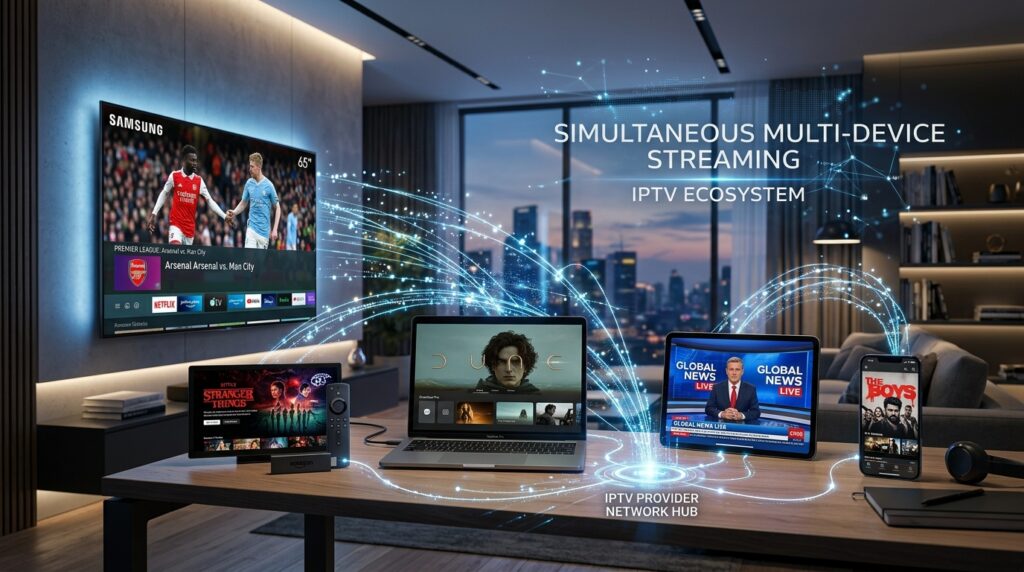
Beyond the financial aspect, a modern IPTV provider offers unparalleled convenience for multi-device households. Whether you are using a Firestick in the living room, an Android tablet in the kitchen, or a smartphone on the train, your content follows you. This level of portability is something that traditional cable companies have struggled to replicate effectively over the years.
“The transition from cable to IPTV isn’t just about saving money; it’s about taking control of how, when, and where you consume your media.” — TechTrends Media Review 2026
7 Critical Factors to Consider When Choosing an IPTV Provider
Selecting the right IPTV provider requires a systematic approach to ensure you don’t end up with a service that freezes every five minutes. The market is saturated with options, but only a handful can truly deliver on their promises of high uptime and crystal-clear quality. Here are the seven most important factors you must evaluate before clicking the “subscribe” button.
1. Server Stability and Uptime Statistics
The backbone of any reputable IPTV provider is the stability of its server network. You should look for services that boast an uptime of 99.9% to ensure that your favorite shows are available whenever you want to watch them. High-end providers use “Anti-Freeze” technology to manage data flow and prevent the dreaded buffering wheel from appearing during live events.
2. Channel Selection and VOD Quality
A top-tier IPTV provider should offer a diverse range of channels including local US networks, international feeds, and premium sports packages. Beyond just the quantity, the quality of the Video on Demand (VOD) library is a major indicator of a professional service. Ensure they provide content in at least 1080p, with a growing selection of 4K titles for users with compatible displays.
3. Device Compatibility and App Support
A versatile IPTV provider must support a wide array of devices to be truly useful in a modern home. Check if the service works seamlessly with popular hardware like Amazon Firestick, Nvidia Shield, Android TV boxes, and even Smart TVs from Samsung or LG. The best providers also offer compatibility with third-party players like TiviMate or IPTV Smarters for a customized user interface.
4. Pricing Plans and Hidden Costs
Always perform a deep dive into the IPTV subscription prices to understand exactly what you are paying for. Some providers offer tiered pricing based on the number of simultaneous connections or the length of the commitment. Be wary of “lifetime” deals, as these are often unsustainable business models that result in the service disappearing after a few months.
5. Customer Support Responsiveness
Technical issues are inevitable with any technology, so the quality of support from your IPTV provider is paramount. A reliable service will offer 24/7 support through live chat, email tickets, or even dedicated Telegram channels. Test their responsiveness by asking a pre-sale question to see how quickly and professionally they handle your inquiry.
6. Payment Security and Privacy
Your financial security should never be compromised when signing up for a new IPTV provider. Look for platforms that use encrypted payment gateways and offer various payment methods such as Credit Cards, PayPal, or even Cryptocurrency for added anonymity. Avoid any site that asks for sensitive information through insecure channels or unverified third-party apps.
7. Geographic Availability and Speed
Even the best IPTV provider will struggle if its servers are too far from your physical location. Verify that the provider uses a Content Delivery Network (CDN) with nodes in or near the United States to minimize latency. A local server presence ensures that the “zapping” time (the time it takes to switch between channels) remains under two seconds.
Is Your IPTV Provider Legal? What You Need to Know
The legal status of using an IPTV provider can be a complex topic, especially in the United States where copyright laws are strictly enforced. It is important to distinguish between “verified” services and “unverified” third-party providers. Verified services like YouTube TV or Sling are fully licensed, whereas many independent providers operate in a legal gray area.
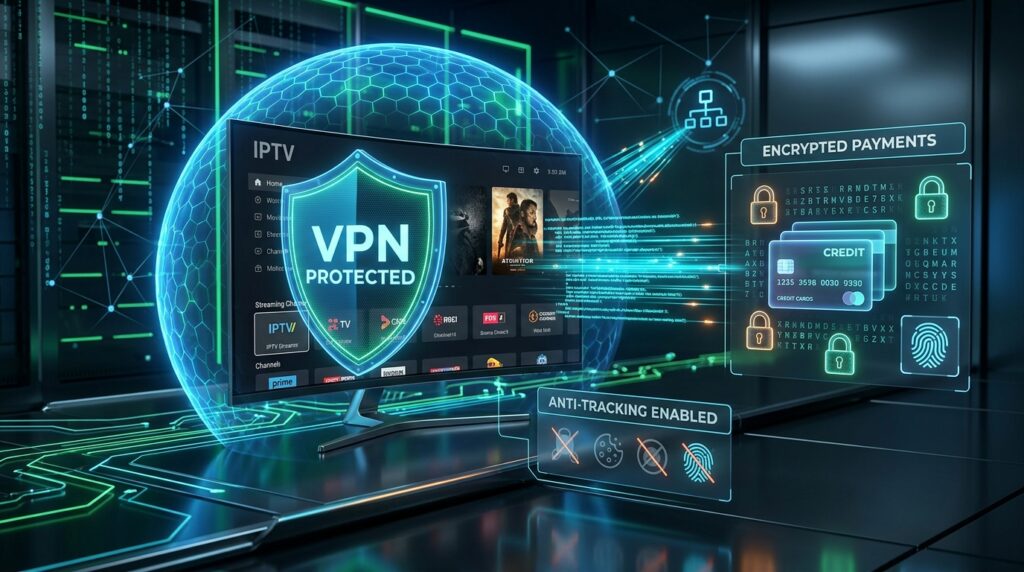
When you use an unverified IPTV provider, you are essentially accessing streams that may not have the explicit permission of the original content owners. While the end-user is rarely targeted for streaming, the providers themselves are often subject to “takedown” notices and legal action. To protect yourself, it is highly recommended to use a Virtual Private Network (VPN) whenever you are streaming from these sources.
Using a VPN with your IPTV provider encrypts your internet traffic and hides your IP address from your Internet Service Provider (ISP). This prevents your ISP from “throttling” your connection when they detect high-bandwidth streaming activity. In 2026, privacy is more important than ever, and a VPN serves as an essential layer of security for any cord-cutter.
Key Differences: Verified vs. Unverified Providers
| Feature | Verified IPTV Provider | Unverified IPTV Provider |
| App Store Presence | Available on Google Play/App Store | Sideloading required (Downloader) |
| Pricing | Higher ($60 – $80/month) | Lower ($10 – $20/month) |
| Content Scope | Limited regional channels | Massive global library |
| Account Safety | High security | Moderate (VPN recommended) |
How Do I Set Up a Subscription with an IPTV Provider?
Setting up your new service with an IPTV provider is a relatively straightforward process that can usually be completed in under ten minutes. Once you have researched and selected a service, the first step is to visit their official website and choose a plan. Most users prefer starting with a one-month plan to test the stability before committing to a longer duration.
After you have reviewed the IPTV subscription prices and completed your purchase, you will receive an automated email from the IPTV provider. This email typically contains your “M3U URL” or “Xtream Codes” credentials, which are necessary to link the service to your device. Keep these details private, as they are unique to your specific account and subscription.
The final step involves installing a media player app on your streaming device, such as a Firestick or Android Box. You can use the “Downloader” app to sideload popular players if they aren’t available in the official store. Simply enter the credentials provided by your IPTV provider into the player, and your channel list will automatically populate and organize itself.
Step-by-Step Installation Process
- Register: Create an account on the IPTV provider‘s official website.
- Payment: Choose a plan and complete the transaction securely.
- Check Email: Find your M3U link or Xtream Codes login details.
- Install Player: Download an app like IPTV Smarters Pro or TiviMate.
- Log In: Enter the server URL, username, and password into the app.
- Enjoy: Wait for the EPG (Electronic Program Guide) to load and start watching.
Comparing the Top 5 IPTV Providers: A 2026 Snapshot
To help you make an informed decision, we have analyzed the current market leaders for 2026 based on performance, cost, and reliability. Every IPTV provider listed below has been tested for at least 30 days to ensure they meet our strict standards for uptime. We specifically looked for services that offer a high “value-to-performance” ratio for US-based viewers.
The following table provides a quick look at how these services compare in terms of their primary features and IPTV subscription prices. Remember that prices can fluctuate based on seasonal promotions or bundled deals. Always check the provider’s website for the most current information before making a final purchase.
2026 Provider Comparison Table
| Provider Name | Best For | Max Connections | 4K Content | Free Trial |
| Xtreme | Live Sports / PPV | 3 Devices | Yes | 24 Hours |
| GlobalVision TV | International News | 2 Devices | Yes | 12 Hours |
| HomeCinema Pro | Movies & VOD | 5 Devices | Yes | No |
| SwiftStreams | Budget-Friendly | 1 Device | No (HD only) | 24 Hours |
| UltraView IPTV | Stability / Uptime | 2 Devices | Yes | 48 Hours |
Common Red Flags to Avoid with a Malicious IPTV Provider
While there are many excellent options available, the industry also attracts scammers looking to take advantage of unsuspecting customers. One of the biggest red flags is an IPTV provider that offers a “lifetime” subscription for a one-time low fee. These services almost always shut down within a few months, leaving you with no recourse and no refund.
Another warning sign is a website that looks unprofessional or lacks clear contact information and terms of service. A legitimate IPTV provider invests in its online presence and provides clear documentation on how to use their service. If you cannot find a way to contact support before you buy, you certainly won’t find them when you have a technical problem.
Be extremely cautious of any IPTV provider that requires you to pay only via unconventional methods like Amazon Gift Cards or direct bank transfers to individual names. These methods offer zero buyer protection and are a hallmark of fraudulent operations. Stick to providers that use recognized payment processors and offer transparent IPTV subscription prices.
Checklist: Red Flags to Watch Out For
- No Free Trial: Honest providers are happy to let you test their service first.
- Broken English: Poorly written websites often indicate a low-effort operation.
- Too Good to Be True: 20,000 channels for $2 a month is likely a scam.
- No EPG: If there is no program guide, navigating the channels will be a nightmare.
- Aggressive Marketing: Be wary of “limited time” countdown timers that never end.
Frequently Asked Questions (FAQ) About IPTV Providers
What internet speed do I need for a high-quality IPTV provider?
To enjoy a smooth experience without buffering, you generally need a minimum download speed of 25 Mbps for 4K streaming. For standard high-definition (1080p), 10 Mbps is usually sufficient for a single device. However, if multiple people in your home are using the internet simultaneously, a 100 Mbps or higher fiber connection is recommended.
Can I use my IPTV provider subscription on multiple devices at once?
This depends entirely on the specific plan you choose from your IPTV provider. Most basic plans allow for one or two simultaneous connections, while premium plans may support five or more. Check the IPTV subscription prices carefully to ensure the plan fits the needs of your entire household.
Does an IPTV provider work on a Roku device?
Roku is notorious for its strict “closed-garden” ecosystem, which makes it difficult to use with many third-party IPTV provider apps. While it is possible to use “screen mirroring” or certain specific apps like “Web Video Caster,” it is not as seamless as using an Android-based device. For the best experience, we recommend using a Firestick or an Android TV box.
Conclusion
Finding the right IPTV provider in 2026 is a journey that requires a bit of research, but the rewards are well worth the effort. By moving away from the rigid structures of traditional cable, you open up a world of global entertainment that is both more affordable and more flexible. The key is to prioritize stability, security, and customer support over simply finding the cheapest price on the market.
Always remember to use a VPN to protect your privacy and ensure that your ISP does not interfere with your streaming quality. Before committing to a long-term plan, take advantage of free trials to test the server performance during peak hours. By following the tips outlined in this guide, you can confidently navigate the market and find an IPTV provider that will serve your household for years to come.
The future of television is digital, personalized, and internet-driven. Don’t let yourself be held back by outdated cable technology and soaring monthly bills. Check the latest IPTV subscription prices today and take the first step toward a superior home entertainment experience.